
A new book by Christian Duarte, PhD
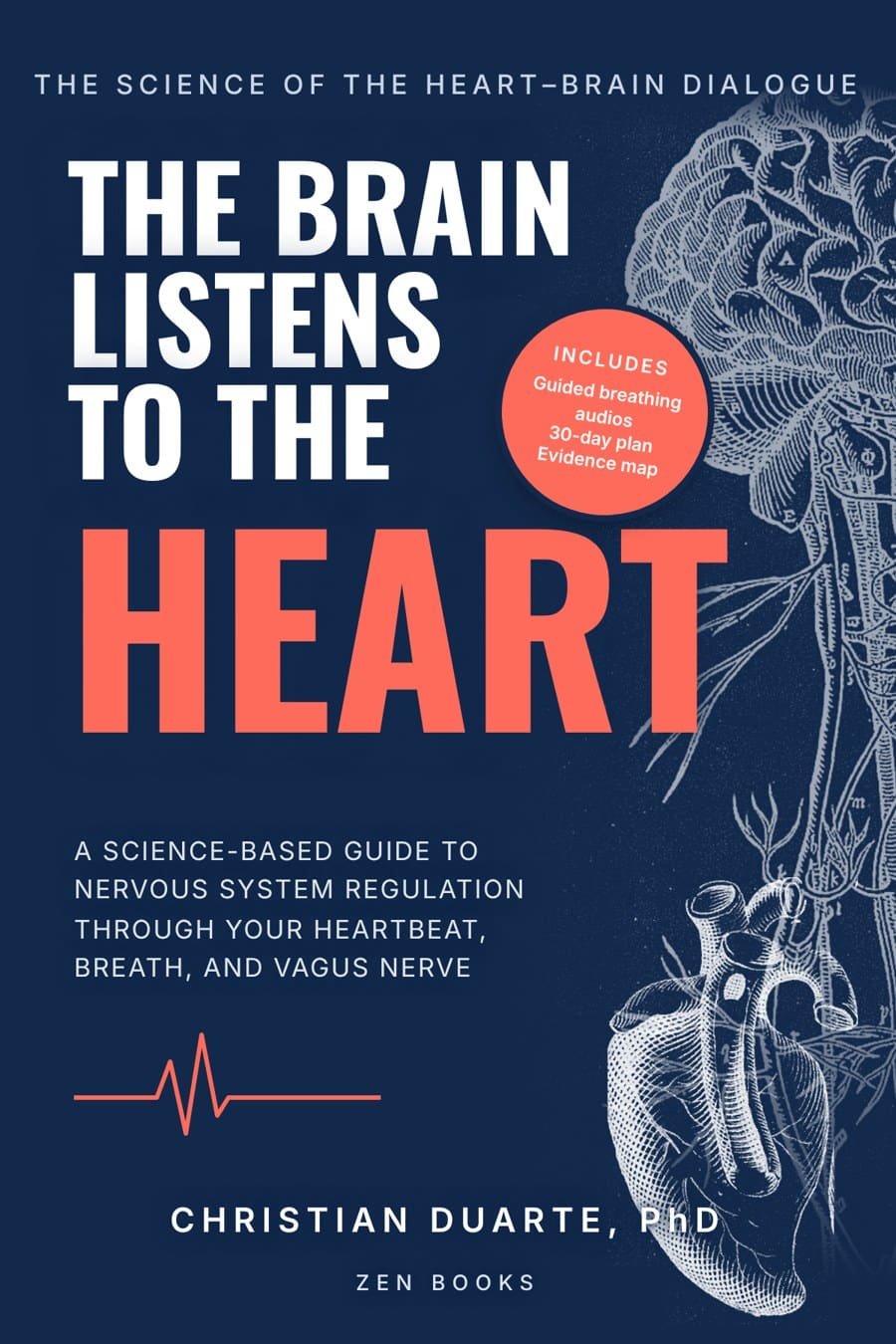
THE BRAIN LISTENS TO THE HEARTYour heart is talking. Your brain is listening.
A science-based guide to nervous system regulation through your heartbeat, breath, and vagus nerve, with every claim graded by how strong the evidence really is.
Why this book
The door nobody told you about
You have been told to relax. It rarely works, because the part of you that is running hot works below willpower. There is one place in that system you can actually feel, measure and train: your heart. Every beat sends a message up the vagus nerve, and your brain listens.
This book follows that conversation in both directions, from the heart’s own neurons to the six-breath rhythm that amplifies it. At every step it tells you what the research has shown, what is only promising, and what is marketing.
Inside the book
Four parts, thirteen chapters, one practice
Every chapter opens with a story from Aesop or folk tradition and closes with a practice, graded for evidence like everything else in the book.
How the book reads the research
The evidence thermometer
Every claim and every practice in the book carries one of four levels, so you always know how sure science is before you decide what to try.
- High consensusSettled across many studies and reviews.
- Moderate evidenceConsistent effects, with real limits.
- PreliminaryPromising, but small or early studies.
- Not shownPopular claims the evidence doesn’t support.
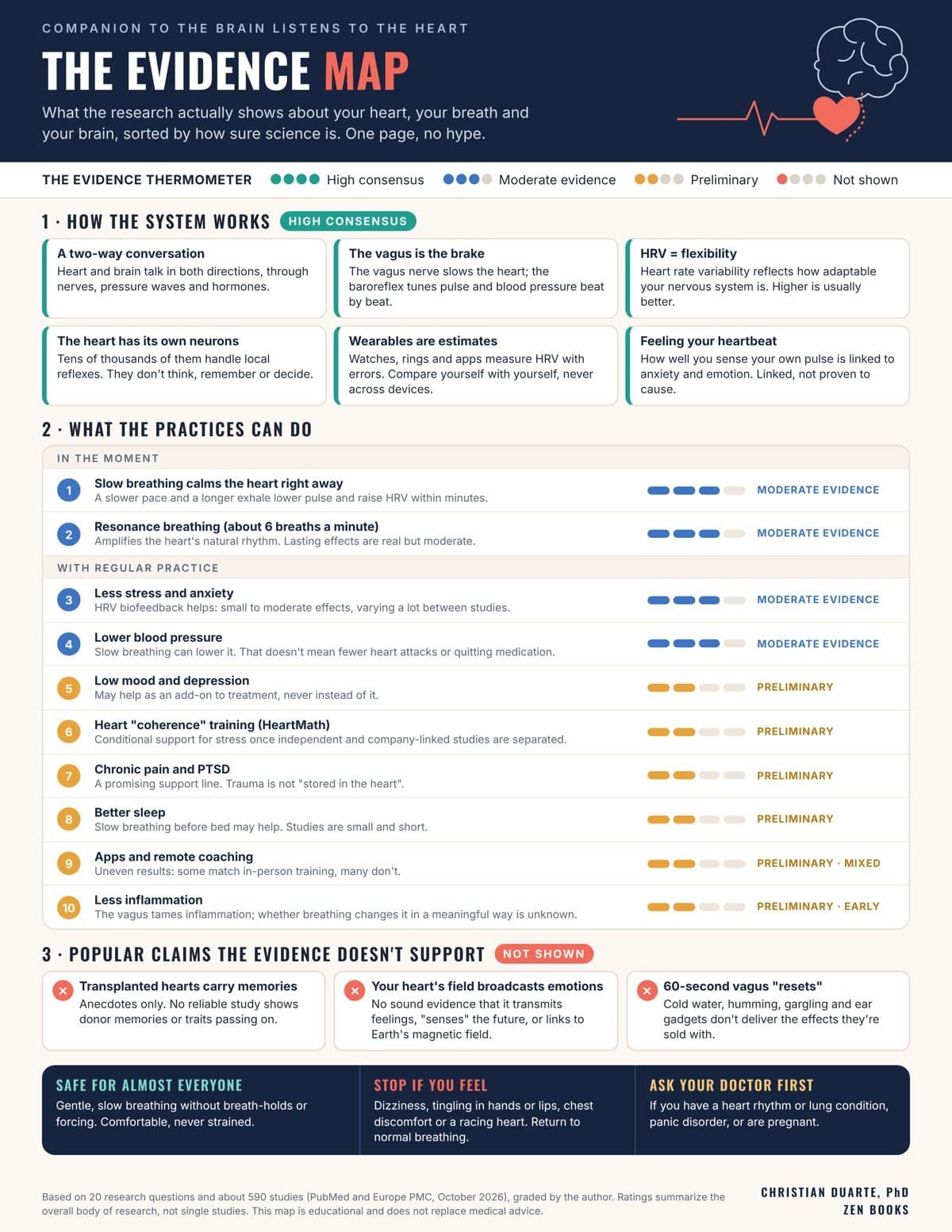
The book’s evidence on one page, from what science has settled to the popular claims it doesn’t support. It comes free with the book.
30-day plan
Evidence map
Included with the book
The book explains why.
The companions are for how.
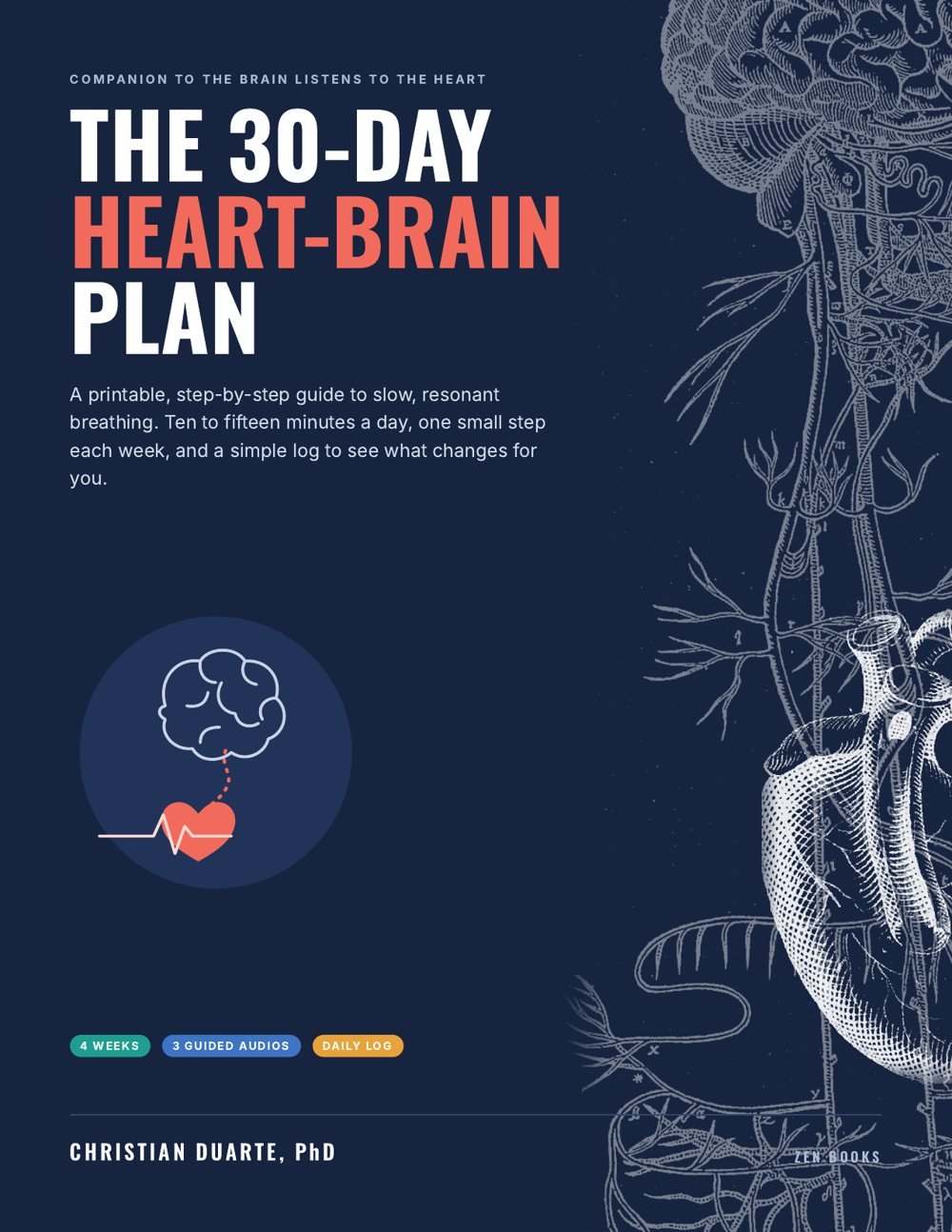
The 30-Day Heart-Brain Plan
One small step each week, a daily log and a pacing chart to find your own resonant breath.
The Evidence Map
What the research shows about heart, breath and brain, sorted by how sure science is.
Your first step: four seconds in, six out.
Settle into six breaths a minute.
Your daily session, six breaths a minute, with attention.
Read the why in the book, one chapter at a time.
Breathe along with the audio for your week.
Log it in the plan and check any new claim against the map.
Scan the code inside the book, or open the page here. Nothing to sign up for.
About the author
Christian Duarte, PhD
Christian Duarte is a molecular biologist with a PhD in social sciences and graduate training in biomedicine, neuroscience, and clinical genetics. He has done research at Spain’s National Center for Biotechnology and at IMDEA Nanoscience.
For nearly a decade he taught research methodology and scientific writing at Universidad Francisco de Vitoria in Madrid: his job, literally, was teaching students to tell a good study from one that only looks like one. That habit runs through this book, which separates what the research has shown from what merely sounds good.
Paperback · Hardcover · Kindle · Coming soon on Amazon