
Free for readers of the book
THE BRAIN LISTENS TO THE HEARTThis Book’s Companions
Three guided breathing audios, a workbook with every practice and six plates in full color, the 30-Day Heart-Brain Plan, and the whole book’s evidence on a single poster. Tell me where to send them, and you can download everything right away.
Send me the companionsLook inside
FREE · NO FINE PRINT · ONE EMAIL WITH THE LINKS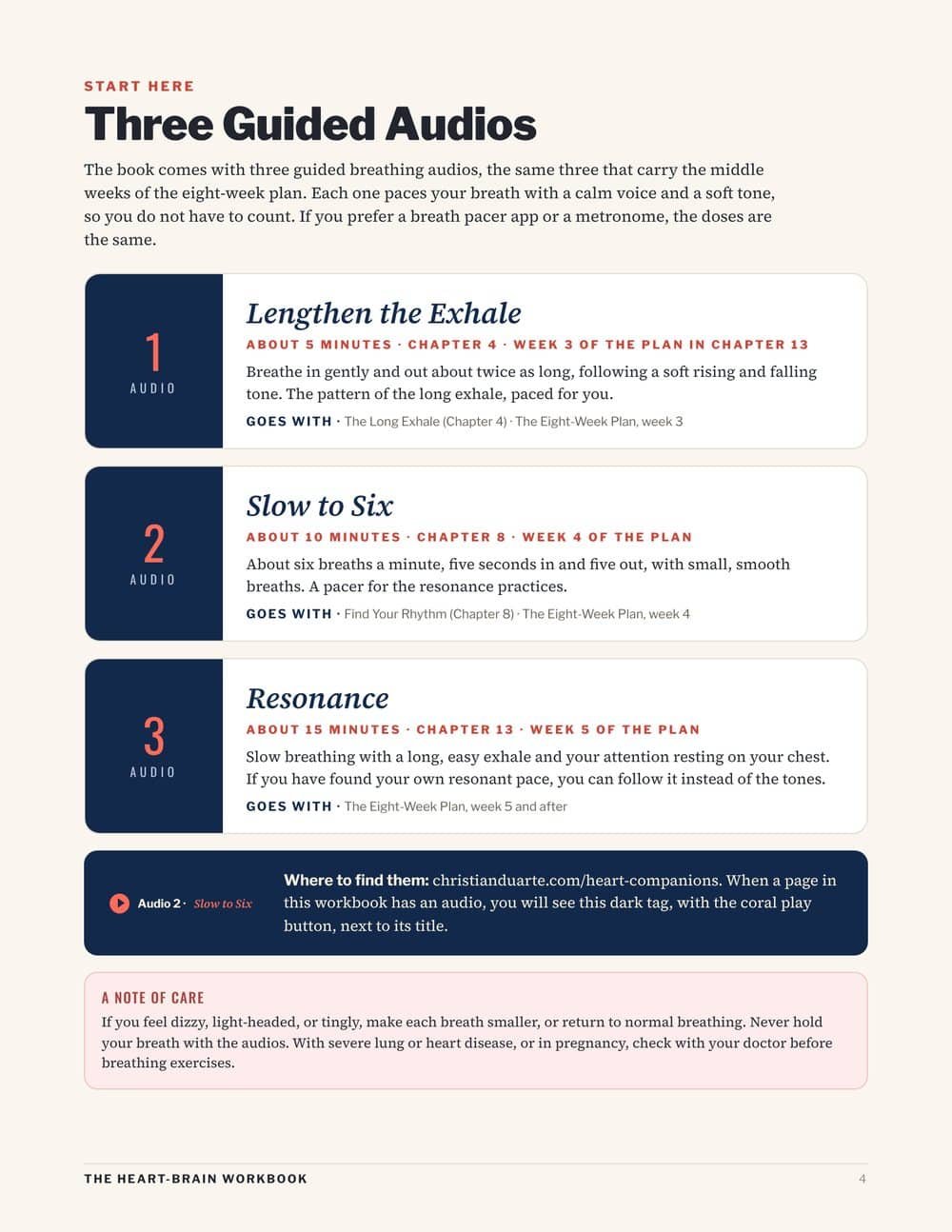
Three guided audios
Breathe along instead of counting
Each audio paces a practice from the book in real time, one for each stage of the eight-week plan. Sit comfortably and use headphones if you can.
Breathe in and out of your nose, letting the exhale run longer than the inhale, paced by a soft rising and falling tone.
About six breaths a minute, five seconds in and five out, small and smooth. A pacer for the resonance practices.
Slow breathing with a long, easy exhale and your attention resting on your chest. Follow your own resonant pace if you have found it.
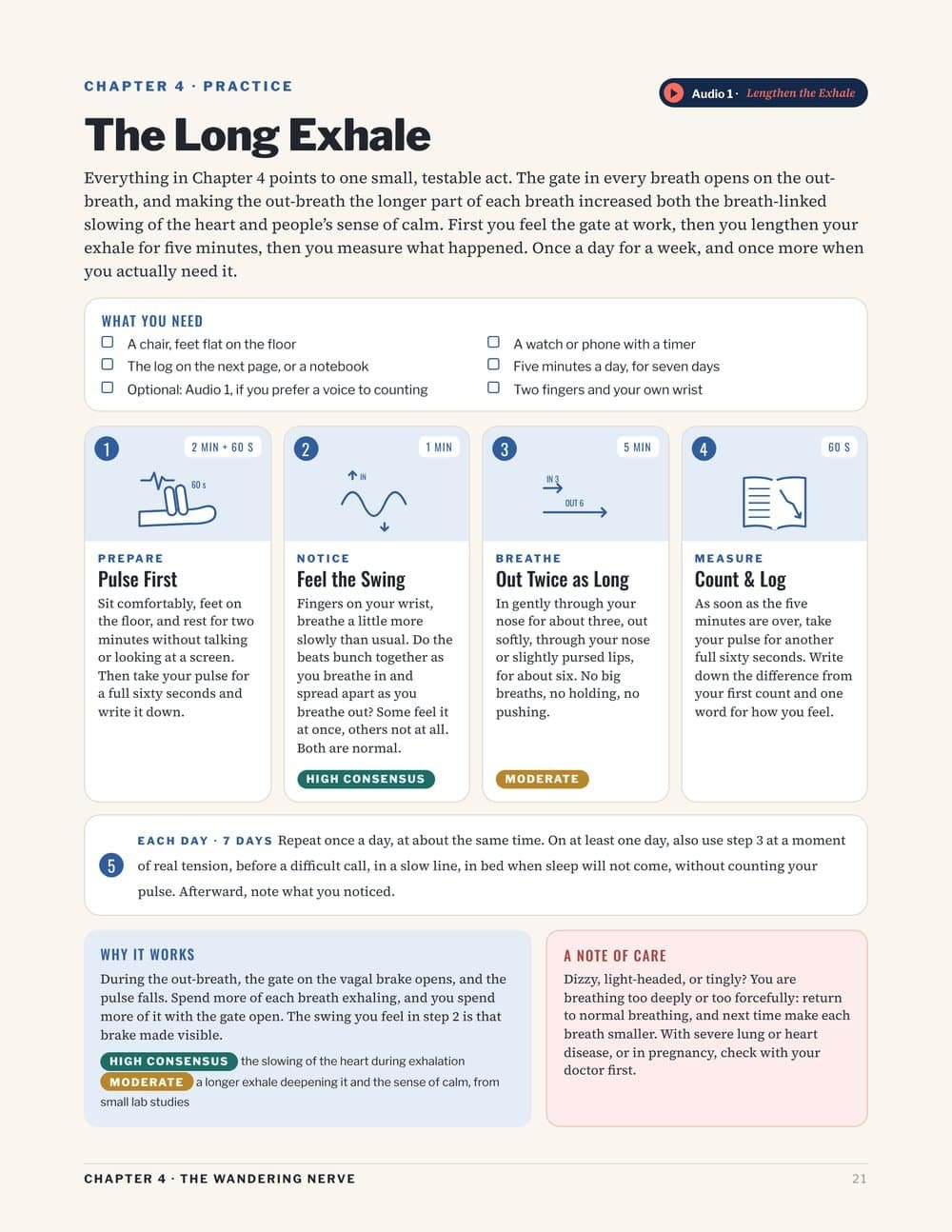
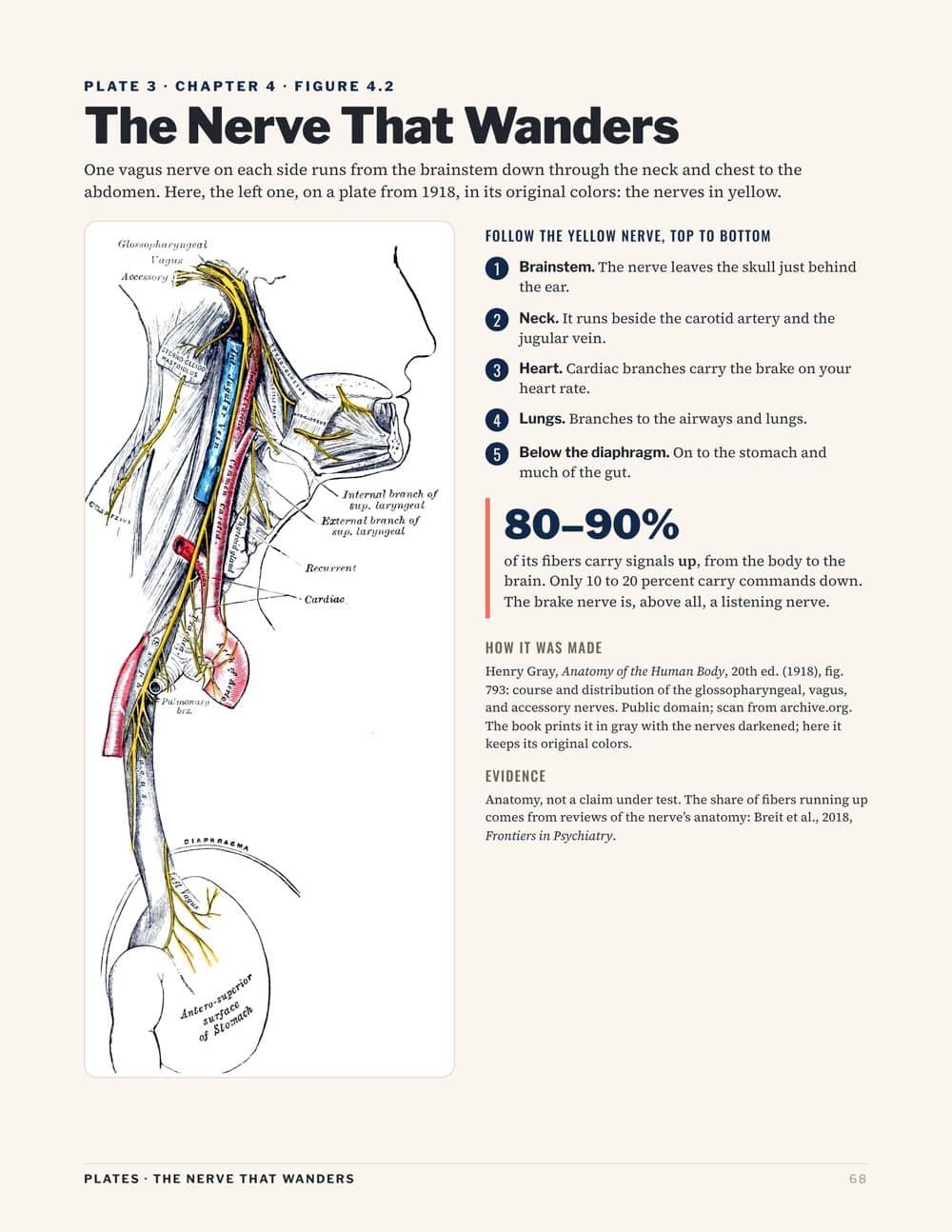
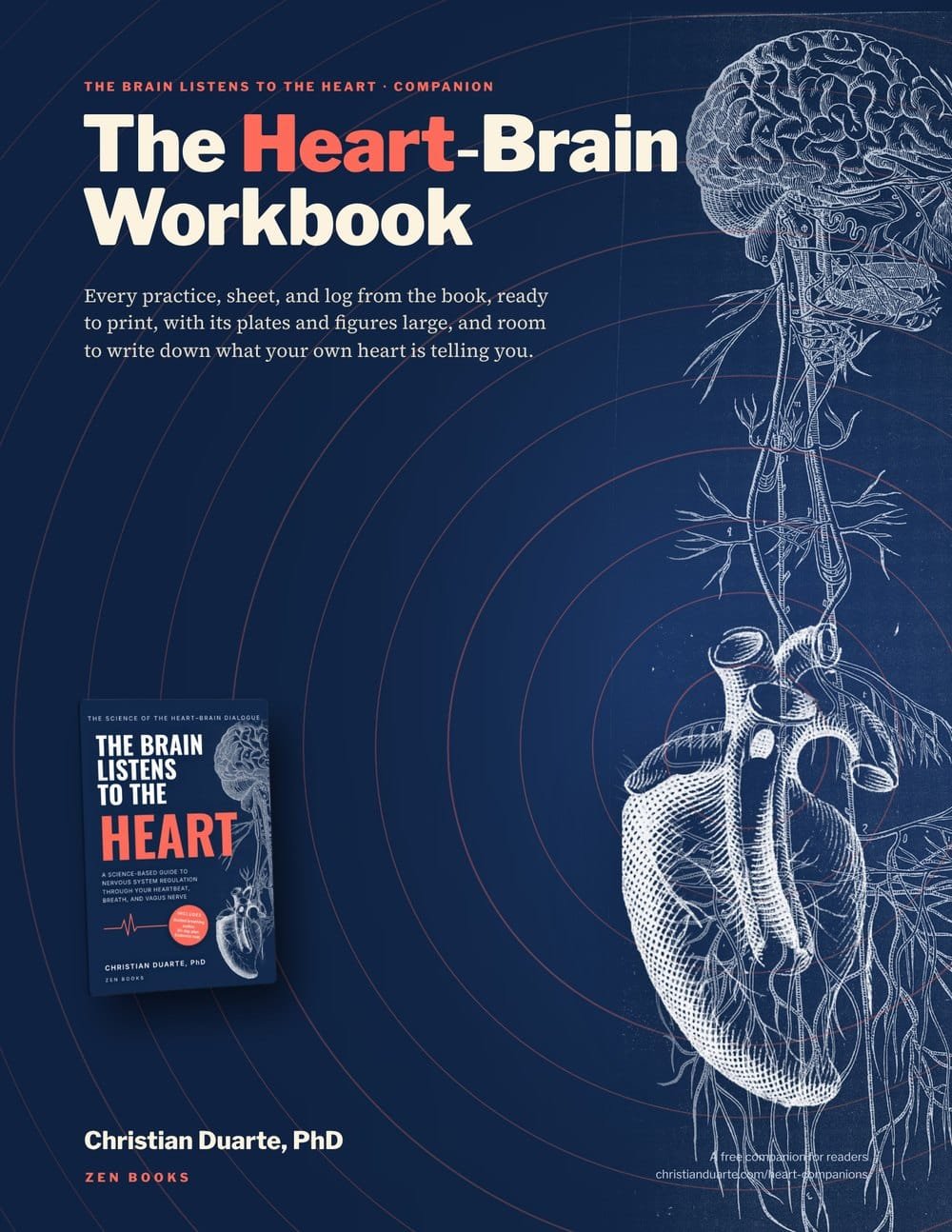
The Heart-Brain Workbook
Every practice, ready to print
The book explains how your heart and your brain talk to each other. The workbook is for trying it at home, with a pen.
- All 13 practices from the book, one for every chapter, with their log sheets and diaries
- Six plates of the heart, the vagus nerve, and the breath in full color
- Two ways through: a one-day version of every practice, or the full eight-week plan
- Four new exercises you won’t find in the book: the Claim Card, the In-the-Moment Card, your If-Then Map, and a Monthly Check-In
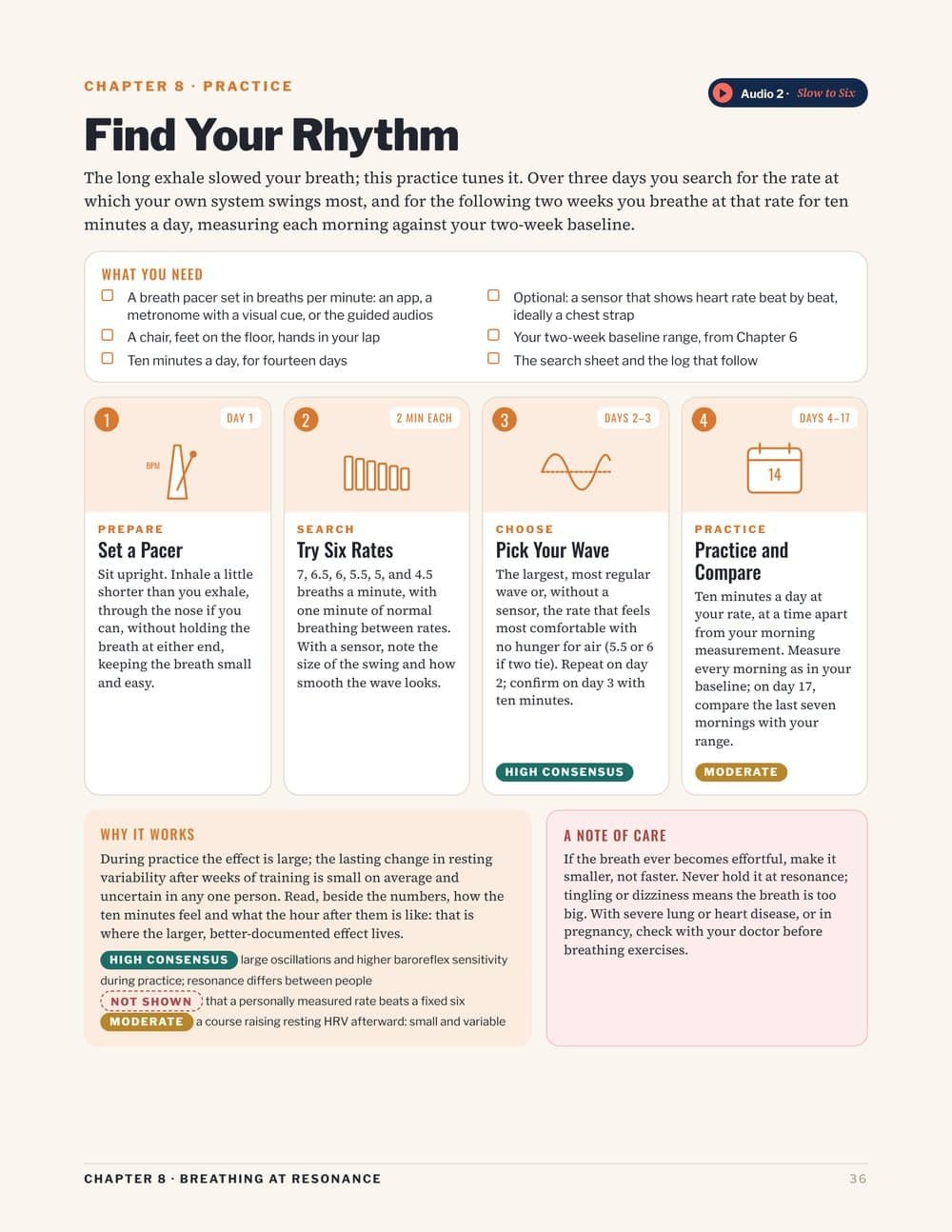
Find Your Rhythm: the breathing rate at which your own heart swings most.
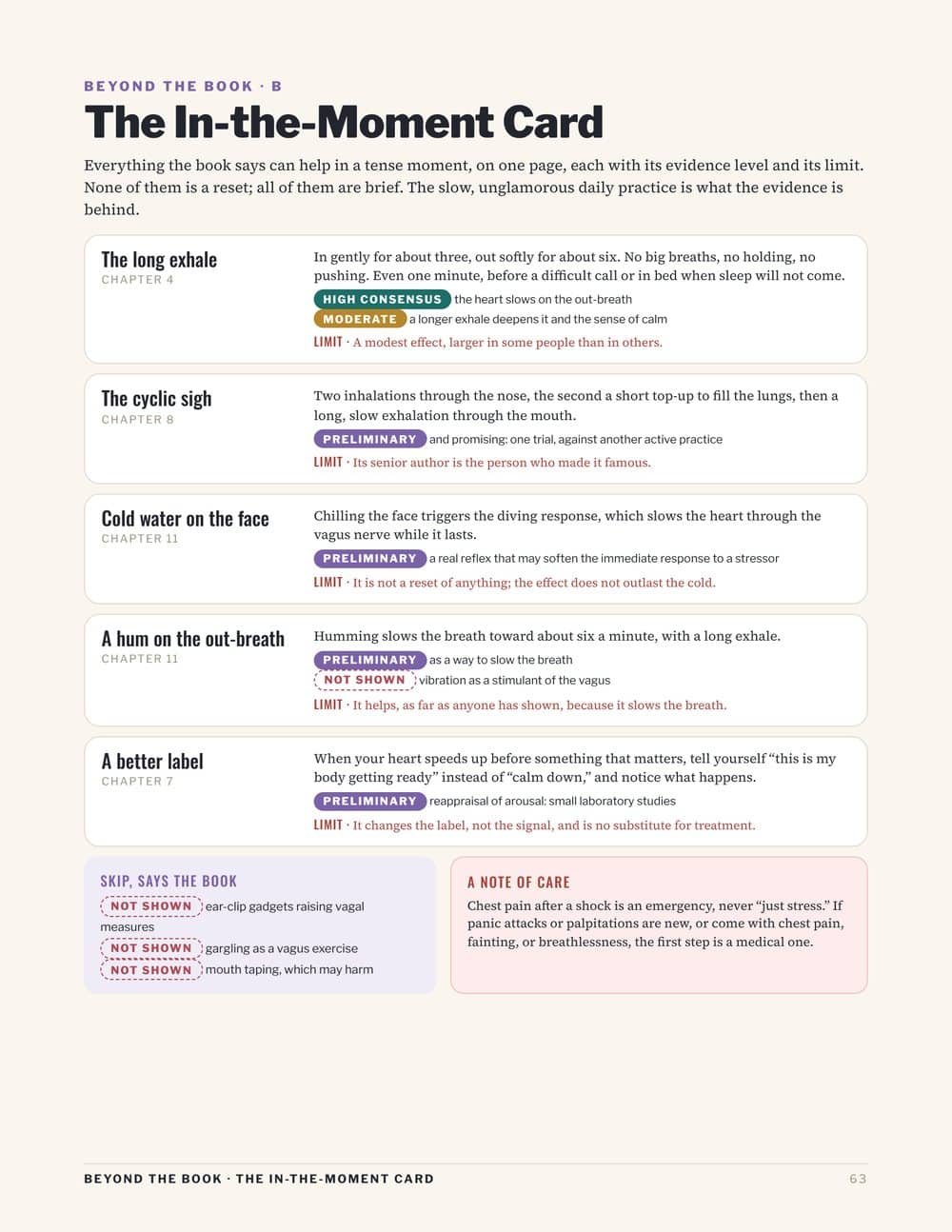
The In-the-Moment Card: what helps in a tense moment, each with its evidence and its limit.
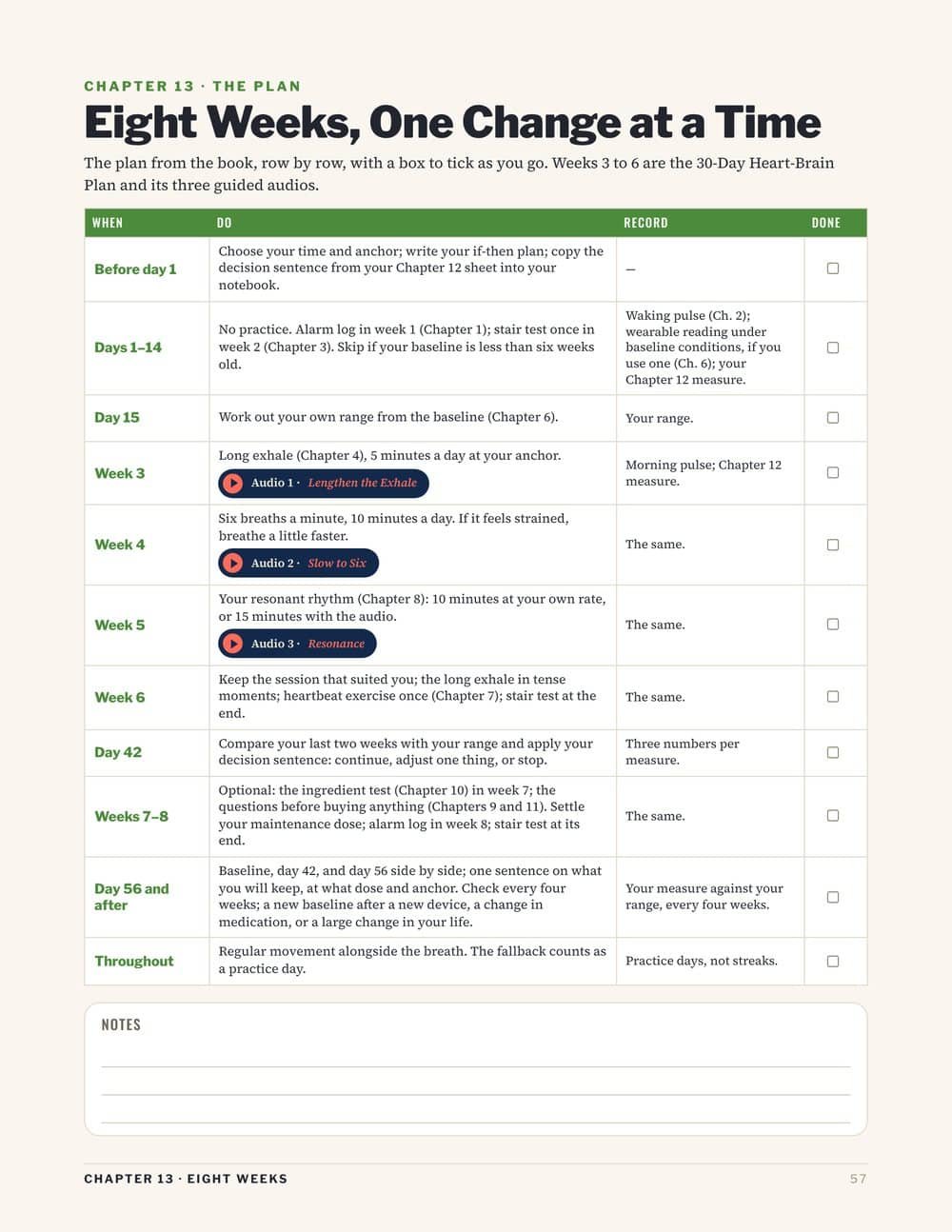
The Eight-Week Plan, row by row, with a box to tick as you go.
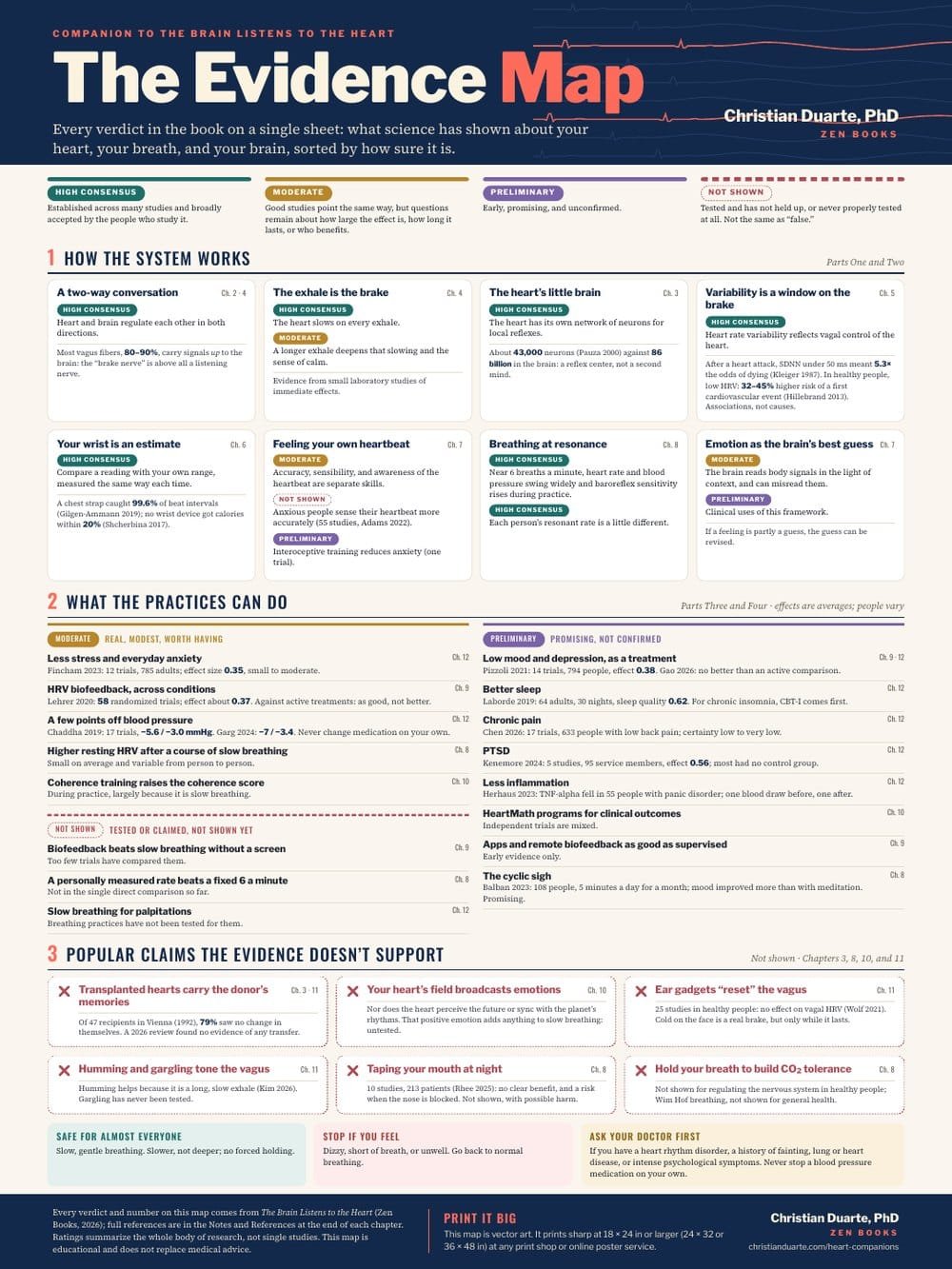
The Evidence Map
What is known, and what is still a hope
Every verdict in the book, gathered on a single poster: how the system works, what the practices can do, and the popular claims the evidence doesn’t support, sorted into the book’s four levels.
How it works
Get your free companions
Type your name and your email.
Download everything right away. I also send you one email with the links.
Print the workbook, put on your headphones, and pin up the map.
If you’d also like me to write to you now and then, tick the box. If you don’t, you get the companions, and nothing more unless you ask for it.
Controller: Christian Duarte Varela. I use your email to send you the companions and, if you tick the box, to let you know what I publish. You can unsubscribe whenever you like. Privacy policy.
The book
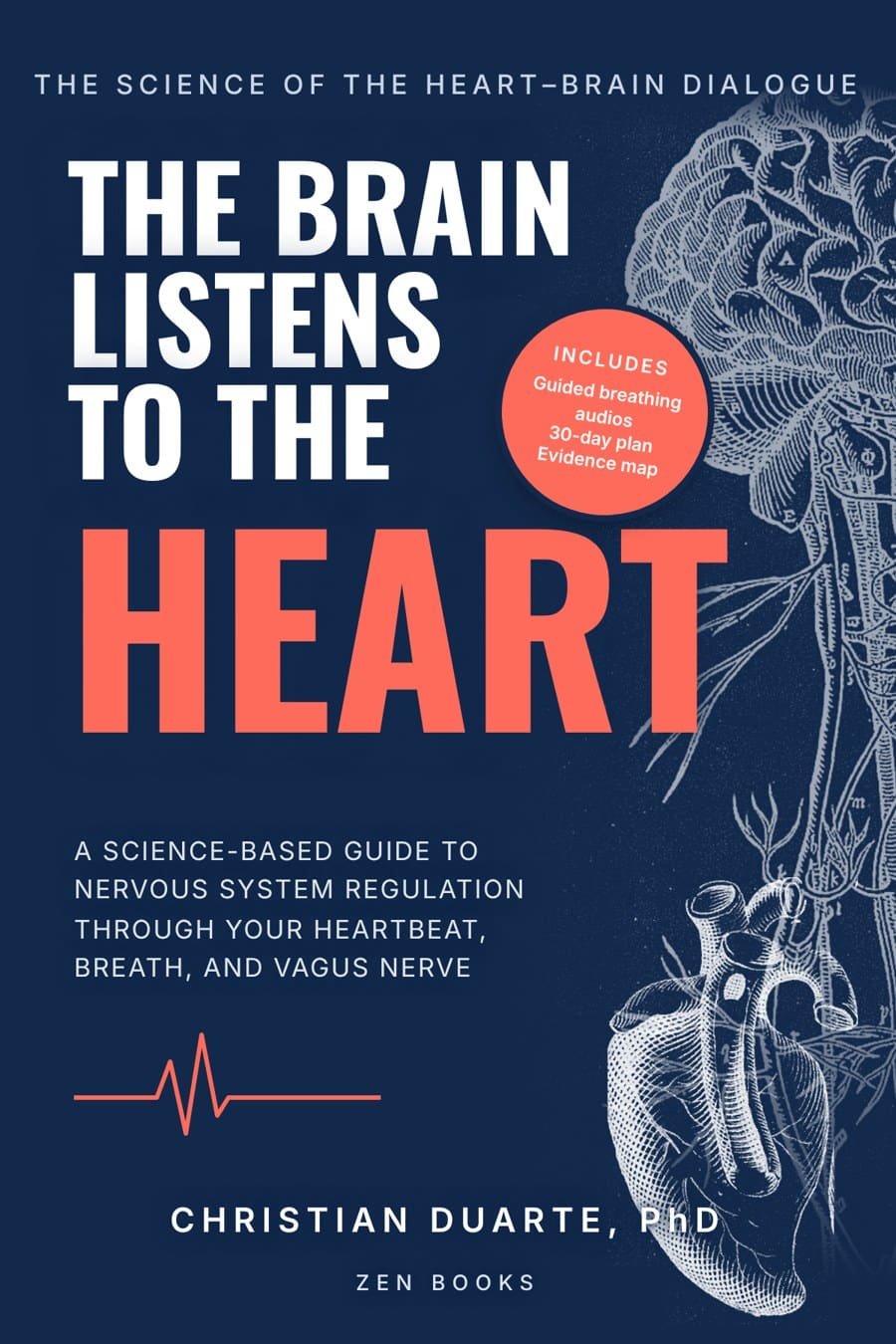
The Brain Listens to the Heart
A Science-Based Guide to Nervous System Regulation Through Your Heartbeat, Breath, and Vagus Nerve
Your heart is always talking to your brain. This book follows the conversation along the vagus nerve, separates what slow breathing and biofeedback can really do from what is only marketing, and ends every chapter with a practice. Every claim carries one of four levels, so you always know how sure science is.
NOW ON AMAZON · ZEN BOOKS
About the author
Christian Duarte, PhD
Christian Duarte is a molecular biologist with a PhD in social sciences and graduate training in biomedicine, neuroscience, and clinical genetics. He has done research at Spain’s National Center for Biotechnology and at IMDEA Nanoscience. For nearly a decade he taught research methodology and scientific writing at Universidad Francisco de Vitoria in Madrid: his job, literally, was teaching students to tell a good study from one that only looks like one.